Building Semrush an AI Trends Engine, Plus the Content to Act on It.
Semrush's owned media division runs Search Engine Journal, Backlinko, and Traffic Think Tank. They came to us with a hard problem: find the topics their buyers are engaging with today, and message around them faster than anyone else, across every channel. So we built the system to do it, automated much of the ongoing research, then produced the content to put it to work.
Client
Semrush
Based In
Boston, MA
Industry
SaaS, Marketing Intelligence
A Division Of
Services
AI Orchestration, AI Visibility, Organic Reddit, Social Content
AI Visibility
semrush.com
How Do You Spot a Trend Before It's Obvious?
Semrush's owned media division already publishes some of the most-read content in marketing. Search Engine Journal, Backlinko, Traffic Think Tank, and the Semrush blog reach millions of marketers a month. The gap was never reach. It was speed.
They wanted to know what their buyers were discussing this week, and measure which themes were gaining traction. We could then establish thought leadership more quickly and message Semrush products around these themes. Doing that manually, every week, across large social media platforms and private communities is slow and expensive. They needed a repeatable system, and the content to act on what it found.
So they came to us to build both.
Their owned media network
Few teams can build production-ready AI systems that actually work for content marketing. Conversion Media has the chops to pull it off.
Nick Eubanks
VP of Owned Media, Semrush
Stage One: A Repeatable Way to Identify Rising Trends
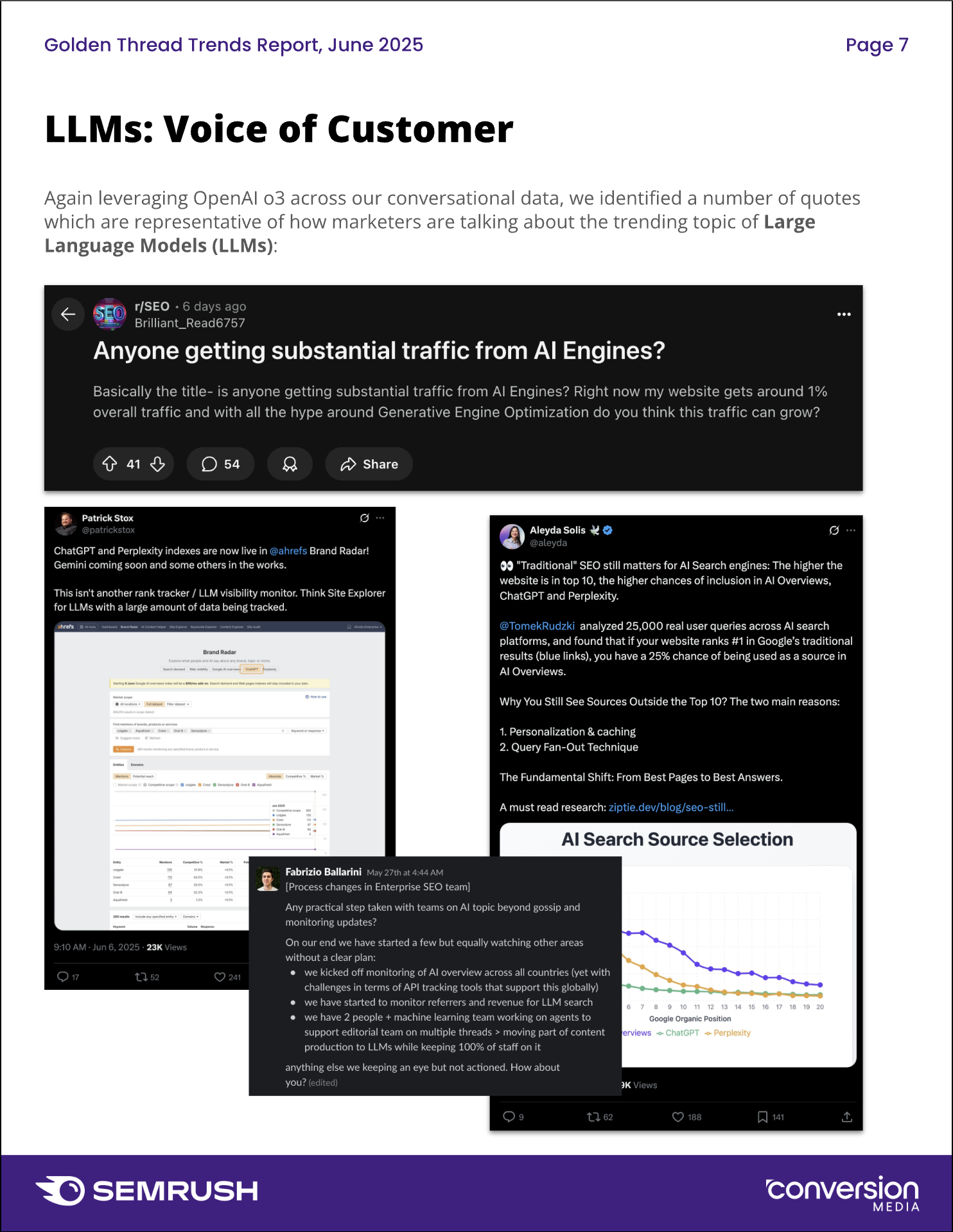
We built the process the way we'd eventually run it, documenting as we produced the first trends report by hand. We identified which communities matter to Semrush's buyers, including platforms like LinkedIn and Reddit, as well as private, high-signal communities like Traffic Think Tank.
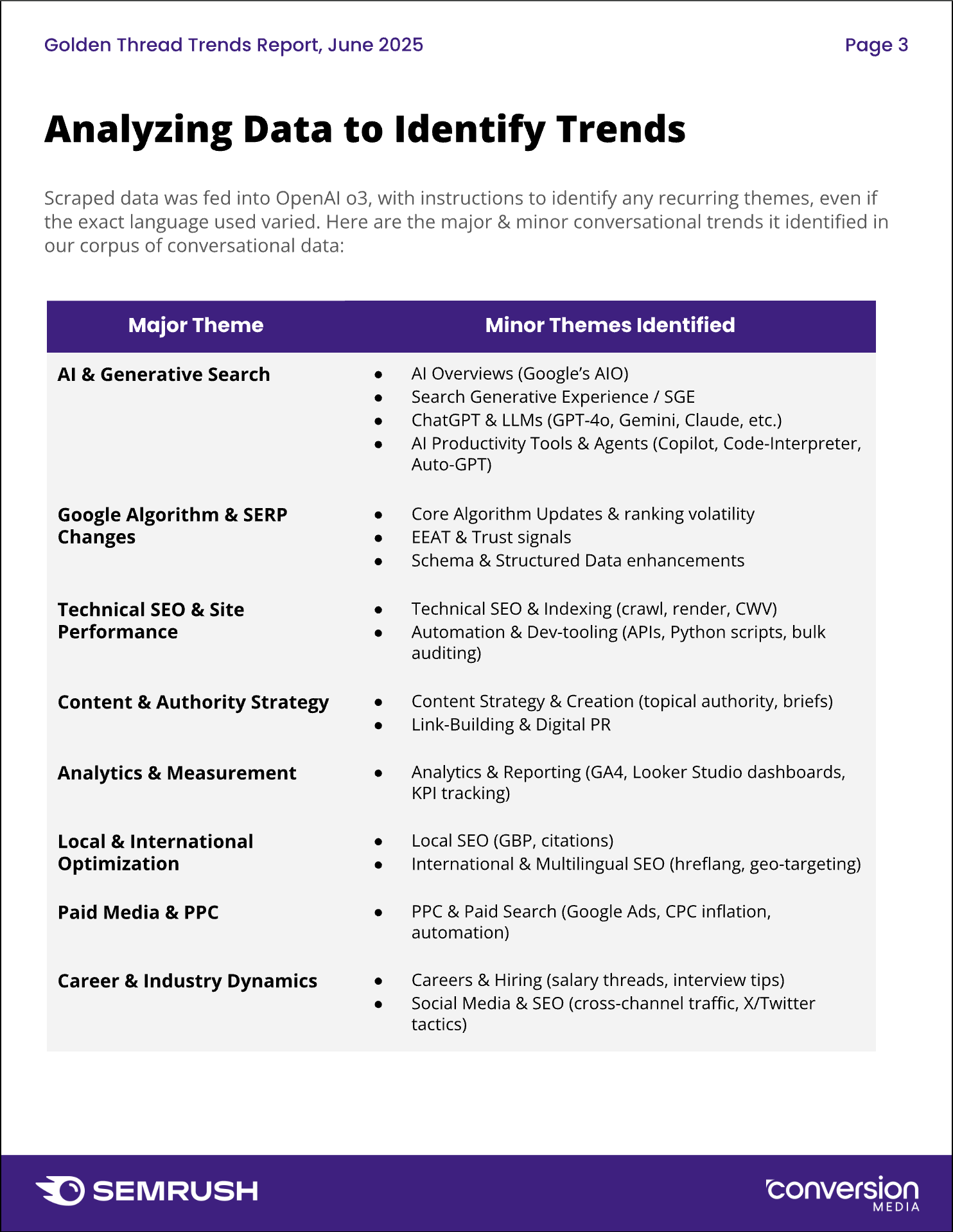
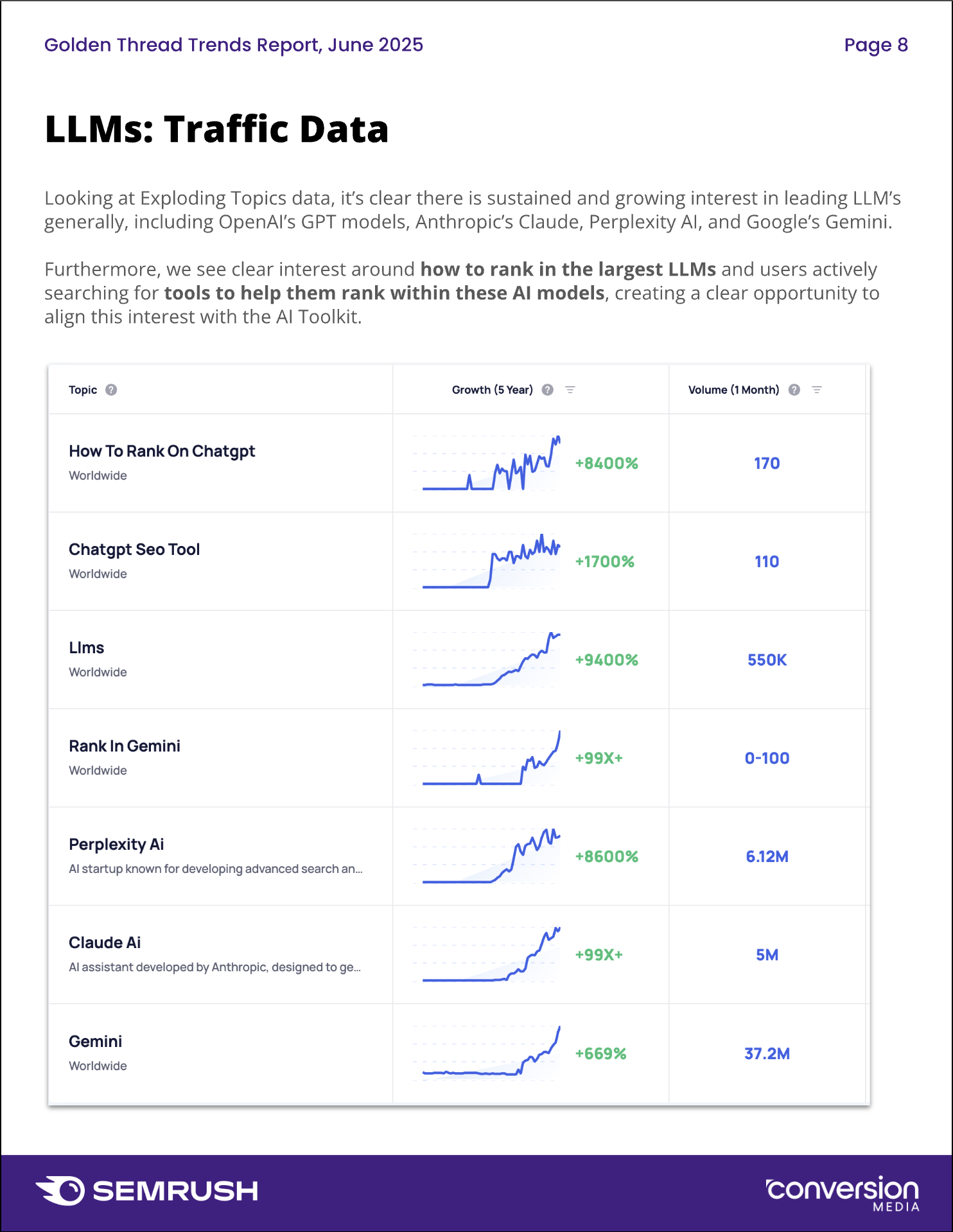
From there we worked out how to scrape the conversation data, split it into tranches an LLM (large language model) could analyze, measure trend prominence by social activity, and corroborate the rising themes against data from Exploding Topics, a Semrush product.
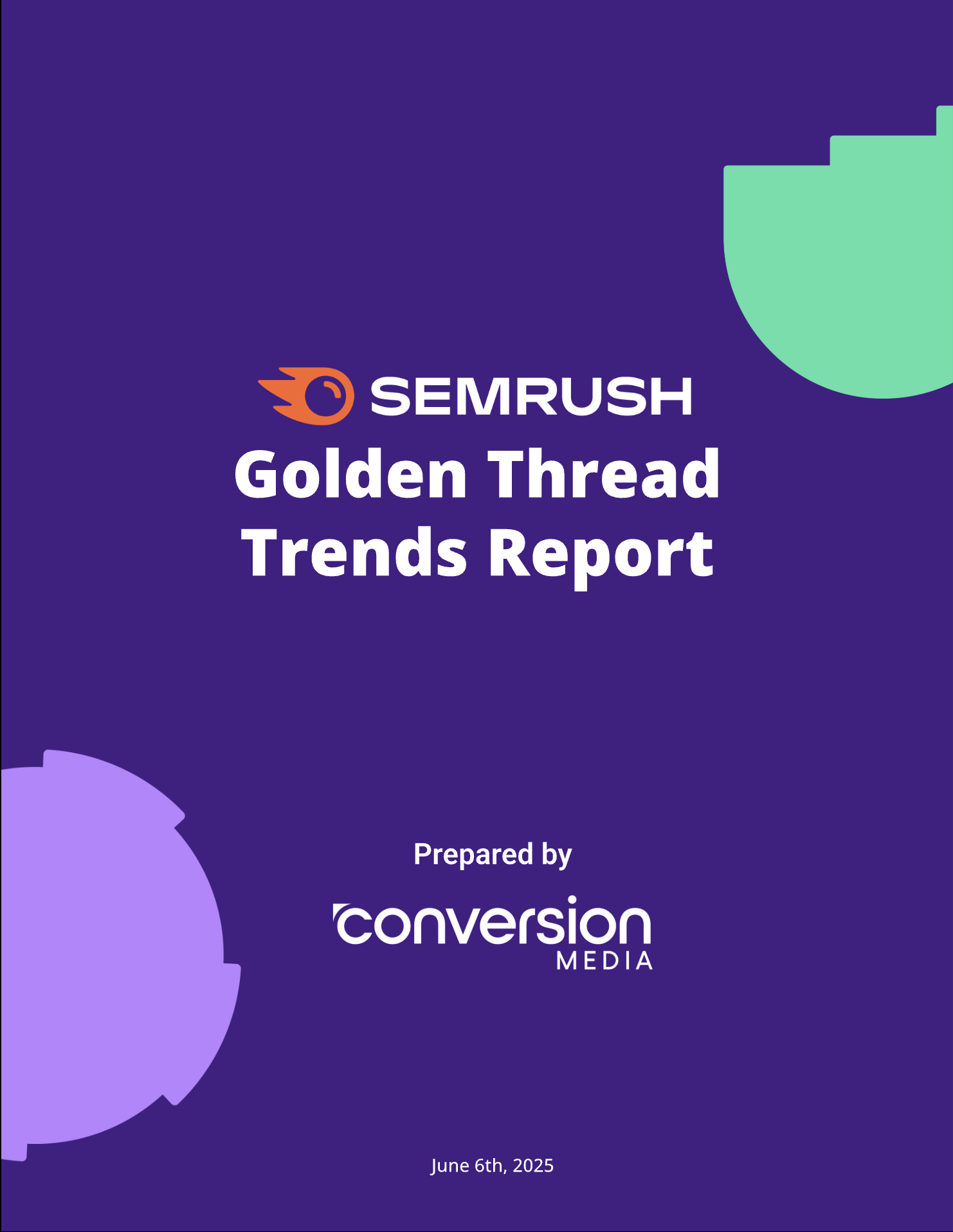
Golden Thread Trends Report · V1 - Sample Pages
What the First Run Surfaced.
A clean analysis of 8 major and 17 minor themes, ranked by mention volume. ChatGPT and LLMs led with 732 mentions, ahead of E-E-A-T (Experience, Expertise, Authoritativeness, Trustworthiness) at 368 and AI Overviews at 243.
Stage Two: Turning the Playbook Into a Machine That Runs Weekly.
A report you run once is a project. A report you run every week is a system. The manual process worked, but it was too expensive to repeat at the pace Semrush wanted, so we automated it.
What we built is an AI orchestration in n8n that takes a single input and runs the whole motion end to end. It went through several iterations, and each one shipped with an updated SOP (standard operating procedure), so the team was always left with a maintainable workflow instead of a black box.
AI Orchestration in N8N
1 input → custom briefs per trend
One input runs the whole workflow and produces a separate messaging brief for every trend it surfaces, at roughly $0.59 in tokens each. It reruns every week and routes straight into Asana.
1
Scrape the conversation
Pull the latest posts from LinkedIn, X, and Reddit, plus dark-social communities like Traffic Think Tank, across a pre-vetted list of industry voices and forums.
2
Score by social signal
Rank every post by how people reacted: likes, upvotes, bookmarks, and replies.
3
Detect the trends
Surface the trending topics across the whole corpus of conversational data.
4
Distill to the top trends
Cut the list down to the trends that genuinely matter.
5
Tag each post
Match every post to a trend, with a confidence score attached.
6
Generate the report
Feed only the tagged posts into the trend-report generator.
7
Write the messaging briefs
Pair the report with detailed product, company, and ICP (ideal customer profile) docs to write briefs that align Semrush products to each trend.
Every brief gets a human QA pass before it goes to the marketing channel owners. That cadence lets Semrush stake a claim on a rising topic and publish content with real depth before it hits critical mass.
Stage Three: Trend-Aligned Content, Across Channels.
Knowing what's trending isn't the same as showing up for it. Semrush already had a strong team producing deep, long-form thought leadership across Semrush, Backlinko, and Search Engine Journal. What they lacked was the same nimbleness where their audience actually scrolls.
So they brought us in to build the distribution layer. We created social assets across LinkedIn and Instagram, including short-form video, audiograms, carousels, polls, and text posts, all aligned to the week's trends and usually tied to a specific, useful way to apply a Semrush product.
Semrush Ad
Promoted · 1.2M followers
···
The AI reality check every marketer needs going into 2025 →
1 / 9
2143147
Semrush
1.2M followers · 2d
···
Translating SEO to AEO: what actually changes, in 40 seconds →
VIDEO
1.1K96180
A sample of the LinkedIn work in this stream: a nine-slide carousel built from a Golden Thread trend, and a looping short-form video. Across the channel, content built on the new approach is averaging 1.9 times the prior traffic baseline.
The early results from the new content they're producing for us are promising. Highly recommended!
Nick Eubanks
VP of Owned Media, Semrush
Stage Four: Boosting AI Visibility Through Reddit.
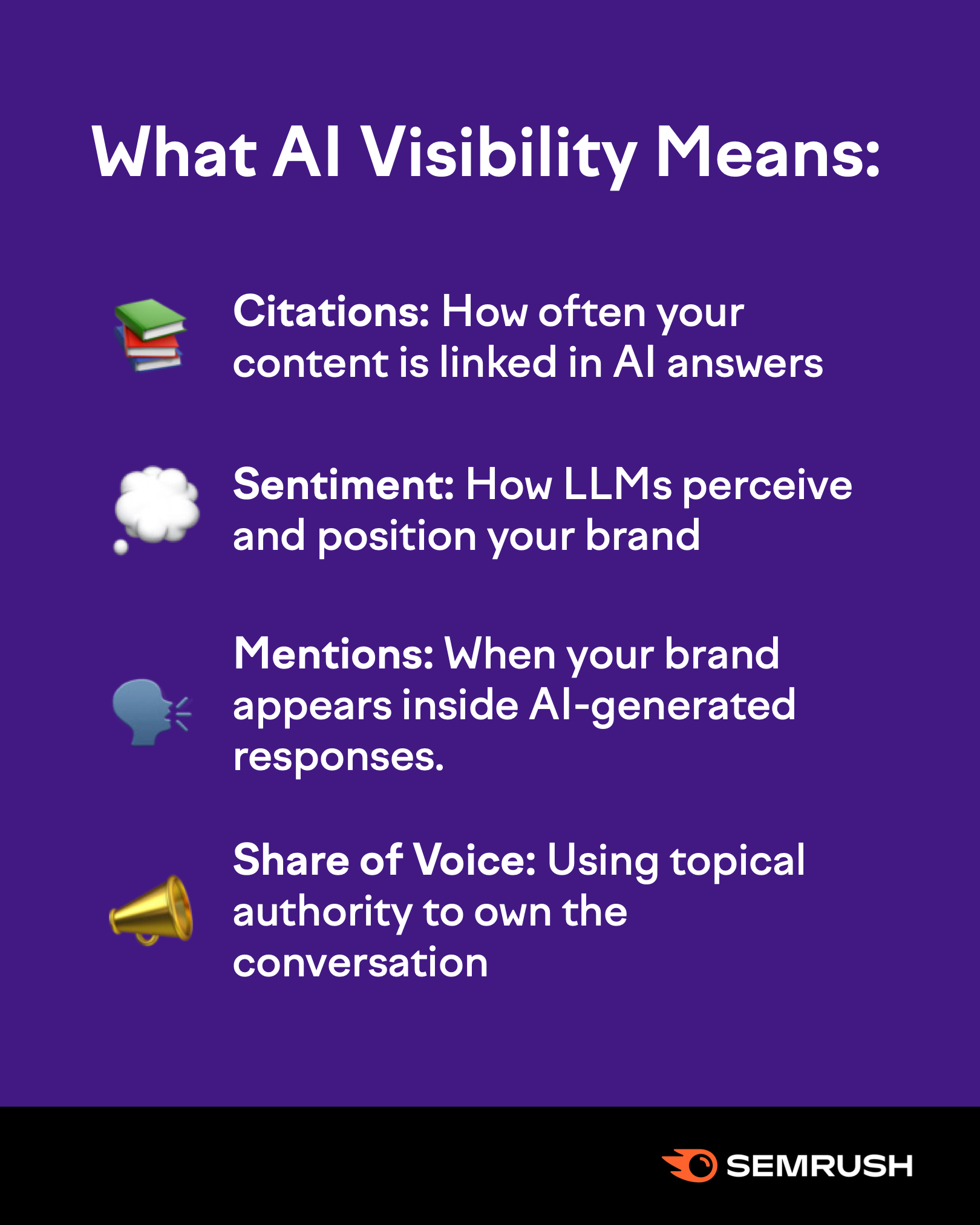
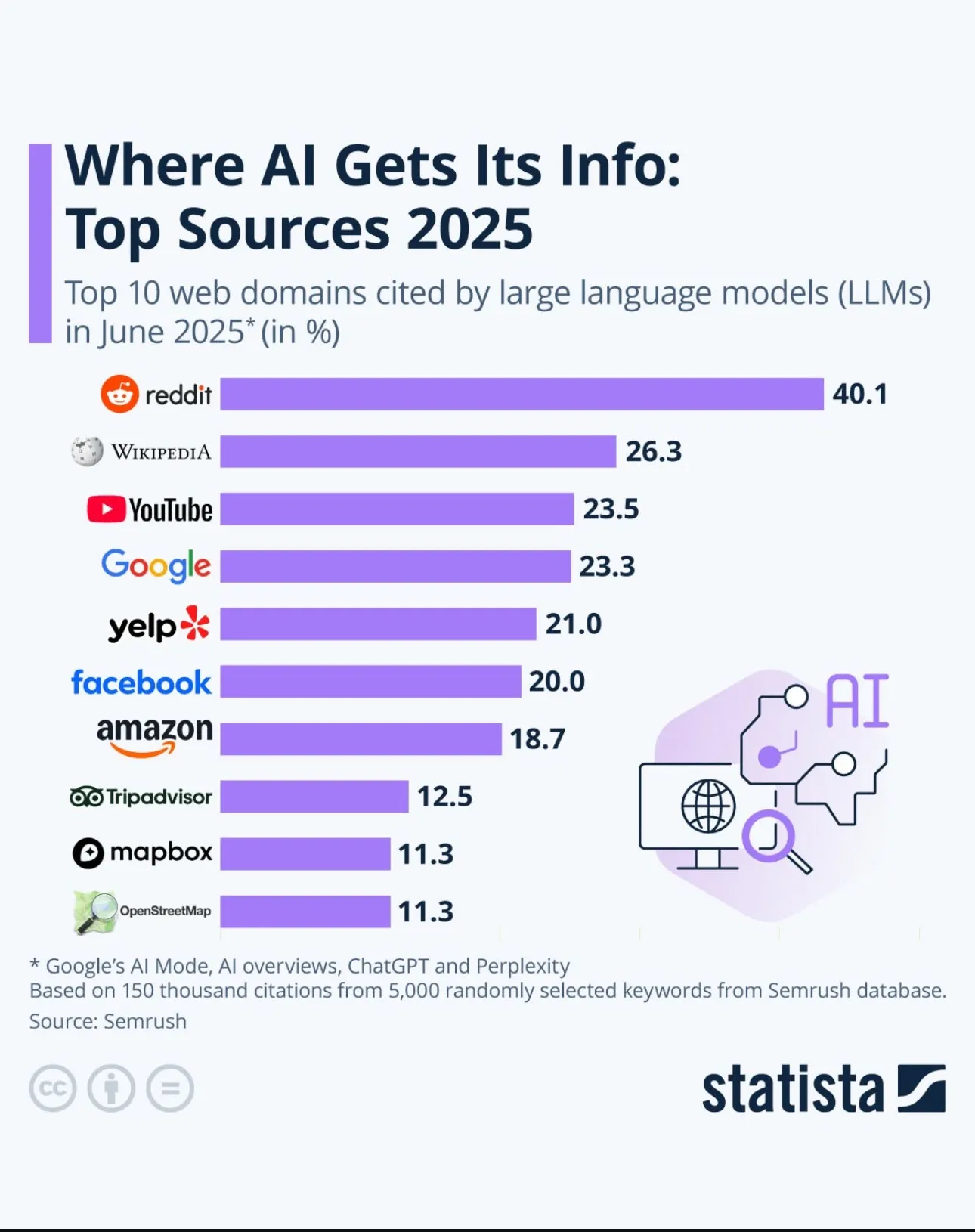
Here's the part most brands miss. When an AI system answers a question, it cites sources. And the single most-cited source online right now is Reddit. If your brand isn't part of those conversations, you're invisible at the exact moment a buyer is being handed an answer.
Our organic Reddit work uses distributed, high-trust accounts to seed genuinely useful content around the use cases and pain points Semrush buyers care about. It runs on a clear method.
Strategic Mapping
We find the subreddits where the buyers gather, read the conversation patterns, and map where the brand can genuinely add value.
Community Integration
Our team becomes real members of those communities, building reputation and learning the culture of each subreddit.
Authentic Engagement
Using real, human-run accounts, we contribute useful insight and mention the brand only when it helps the conversation.
Reputation Monitoring
Monitoring runs around the clock, so we catch every brand mention, amplify the good, and address concerns fast.
AI Optimization
We structure responses to resonate with people and to be citable by AI systems as an authoritative source.
Performance Tracking
We track brand mentions, AI citations, branded search, and community sentiment in a monthly report.
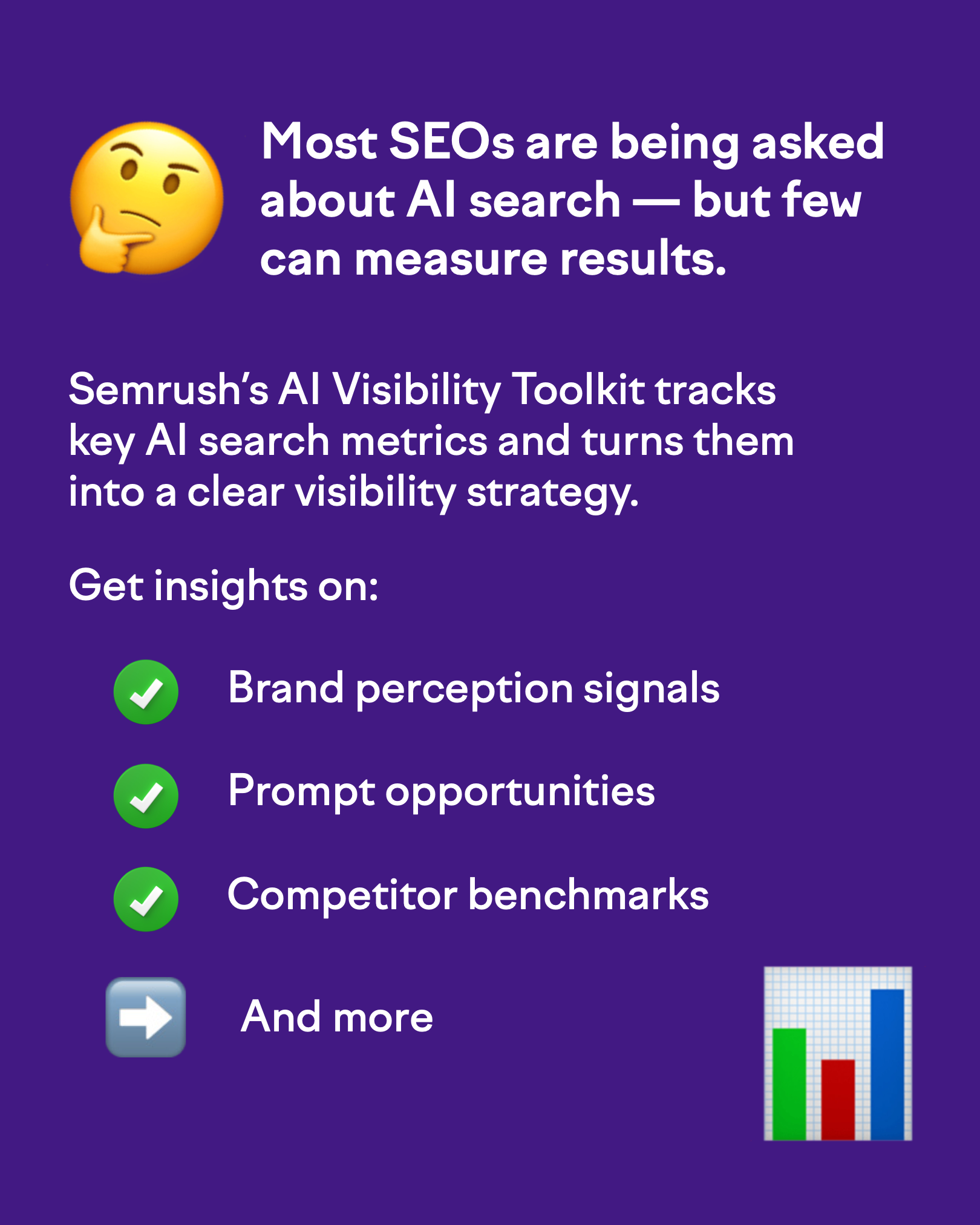
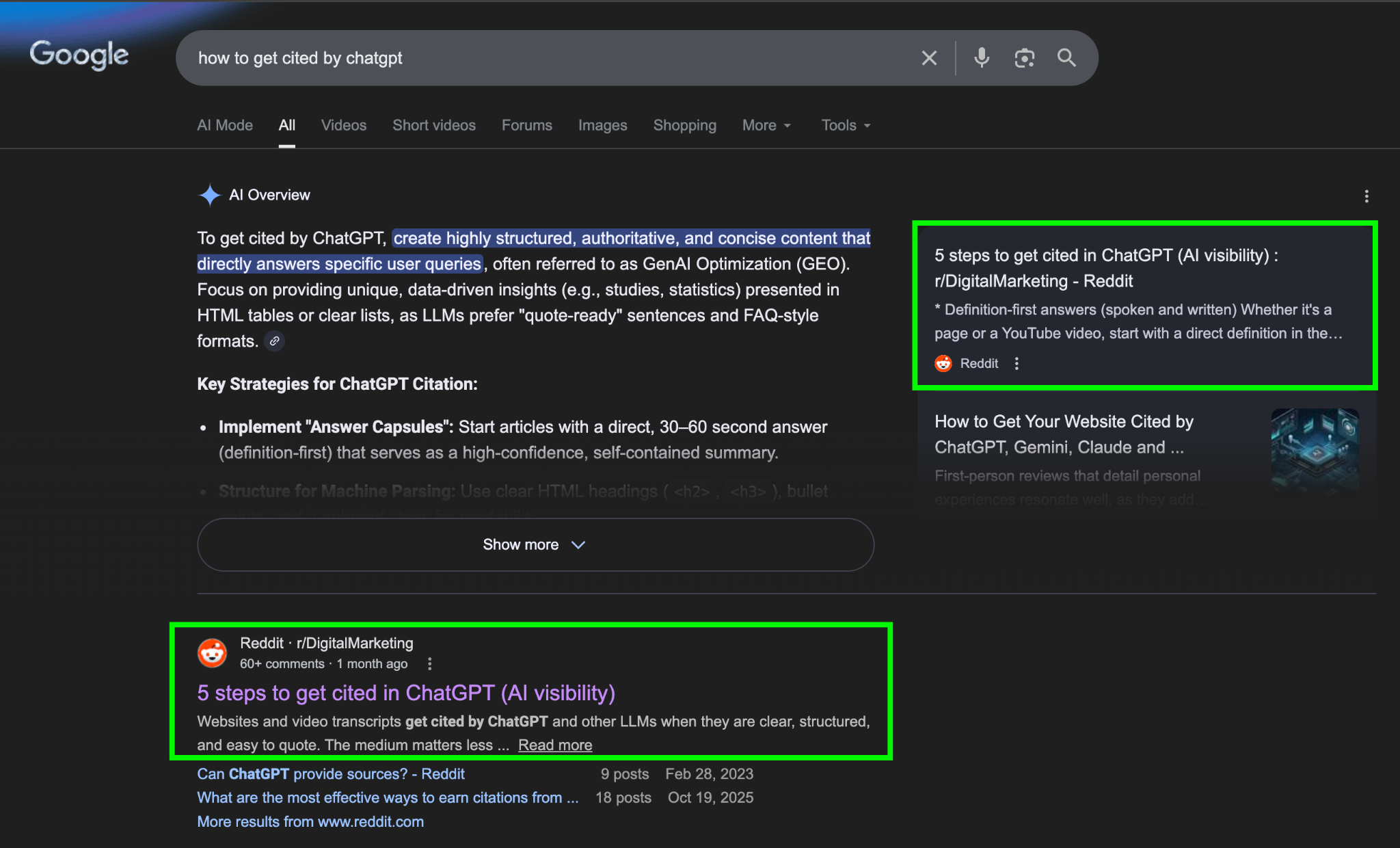
We started by mapping the subreddits where digital marketers gather, noting which were already showing up in Google's AI Overviews and its Forums and Discussions results. Then we posted real, value-first answers from aged accounts, mentioned Semrush only when it genuinely helped, and seeded early engagement so the threads reached the wider community. The first focus was awareness for the features in Semrush's AI Visibility Toolkit.
google.com/search?q=how+to+get+cited+by+chatgpt
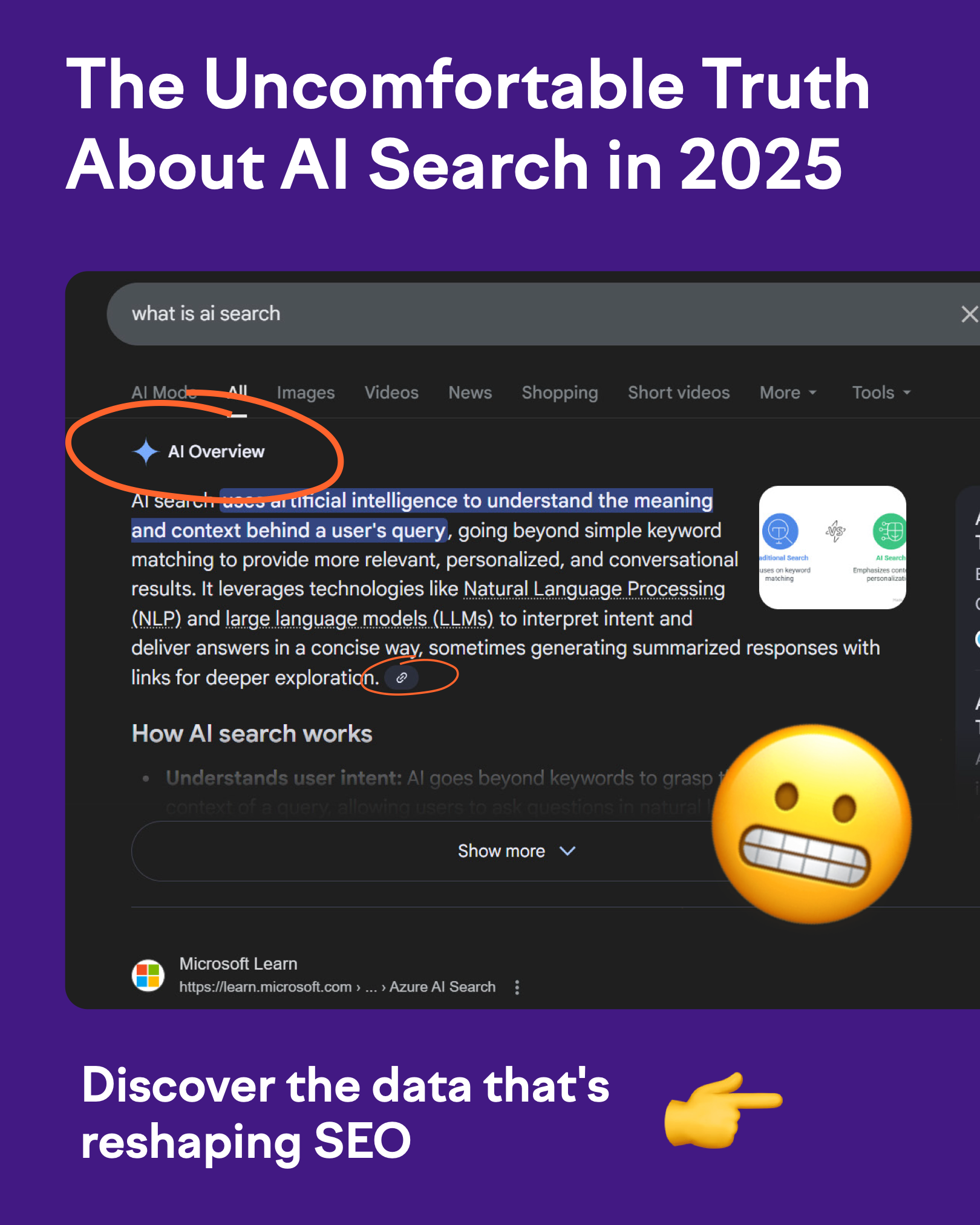
One of our threads ranking on Google for "how to get cited by chatgpt," both in the organic results and inside the AI Overview at the top of the page.
40.1%of AI citations point to Reddit
That's why this works. Prominent, positive threads where Semrush is part of the answer don't just reach people. They feed the models. In the first three months, our threads drove more than 130,000 views, 568 comments, and 833 upvotes, and some now rank for terms as competitive as "how to get cited by AI."
What It's Driving So Far.
The system runs every week, the content stream is consistent, and the early numbers point the right way. Social content built on the new approach is averaging traffic 90% higher than the prior baseline, with reposts up 15 percent and new MRR (monthly recurring revenue) climbing.
On Reddit, the first three months drove more than 130,000 views, 568 comments, and 833 upvotes, and the threads now rank for highly competitive terms. Every one of those is a chance to grow Semrush's share of voice, and its odds of being the brand AI systems name when a buyer asks.
More work
Proof, Not Promises.
Brand sprints, zero-drop migrations, AI orchestration, and the organic content that compounds. One senior-led team, the whole motion.
See What ChatGPT, Gemini, and Claude Say About Your Brand.
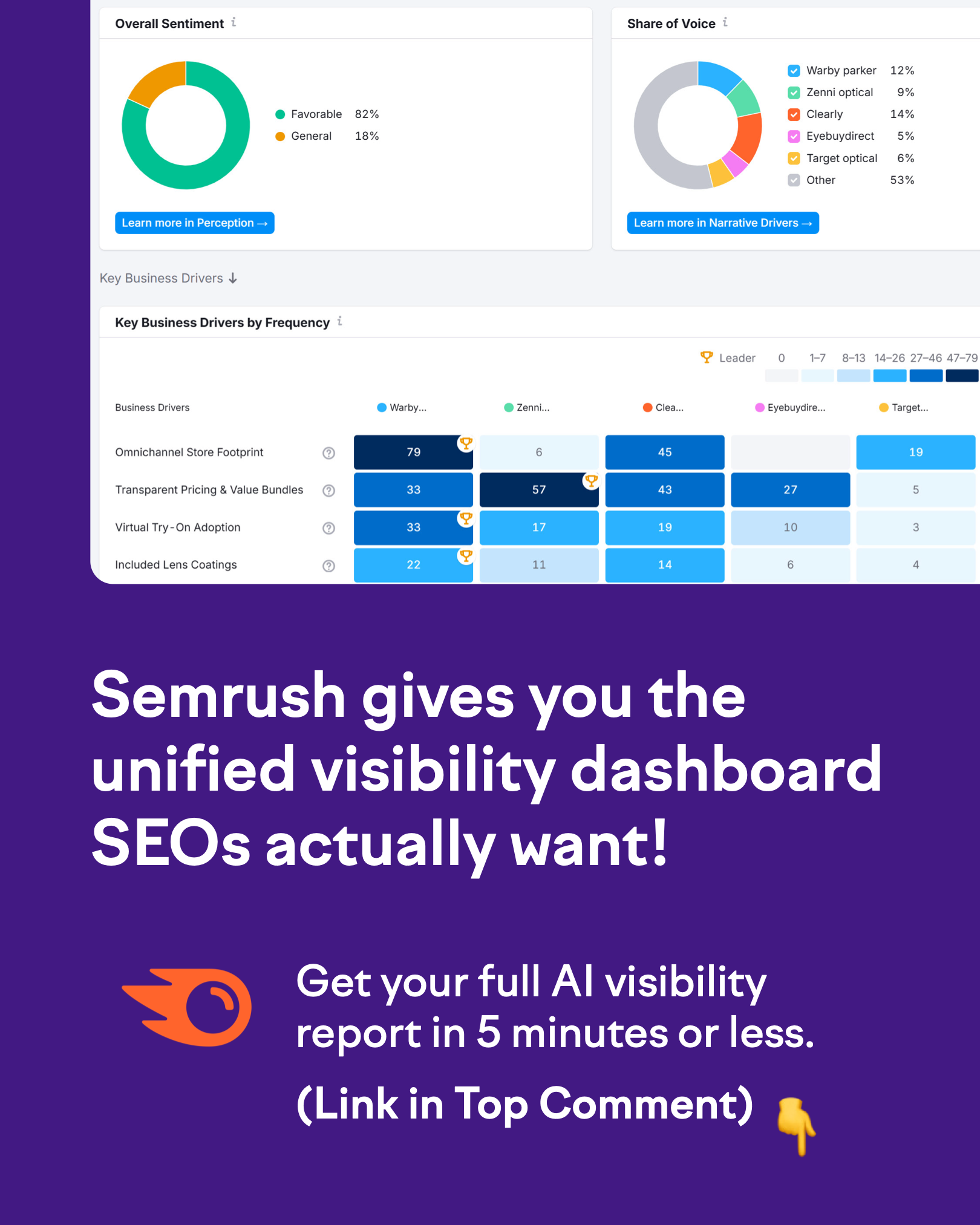
Get your free AI Visibility Snapshot: a moment-in-time analysis of how your brand shows up across ChatGPT, Gemini, and Claude, plus a prioritized roadmap to improve your AI rankings.
Brand visibility score across ChatGPT, Gemini, and Claude
Competitive benchmarking against your top rivals
Keyword-by-keyword breakdown with model-level responses
A prioritized roadmap to improve your AI search rankings